Welcome to Senator Cristina Castro's legislative website
Castro encourages local organizations to apply for pre-apprenticeship funding
- Details
- Category: News
 ELGIN — To expand the 22nd District’s talent pipeline and boost diversity in Illinois’ construction and building trades, State Senator Cristina Castro is encouraging local community-based organizations to apply for the latest round of funding through the Illinois Works Pre-Apprenticeship Program.
“Initiatives like the Illinois Works Pre-Apprenticeship Program are crucial in preparing the next generation of Illinoisans for careers in the construction trades,” said Castro (D-Elgin). “The success of this program has been transformative for not only the residents of Illinois but for the state’s overall economic development.”
Castro announces disaster assistance available to those impacted by storms
- Details
- Category: News
 ELGIN — State Senator Cristina Castro is sharing disaster assistance for those affected by the summer storms. Families and businesses in Kane and Cook Counties may be eligible for recovery assistance from the U.S. Small Business Administration as well as waived tax penalties and interest.
“Our community has been left devastated by the effects of recent severe weather, including families and small businesses,” said Castro (D-Elgin). “I encourage residents and businesses impacted by the storms to apply for this temporary tax relief through the SBA.”
Vision care regulation and transparency bolstered under Castro law
- Details
- Category: News
 SPRINGFIELD — To improve patient protections and strengthen industry oversight, State Senator Cristina Castro led a new law enhancing regulations for vision care organizations throughout Illinois.
“Patients deserve a vision care system that prioritizes access, transparency and choice,” said Castro (D-Elgin). “By holding vision care organizations accountable, we can foster fair competition and ensure patients – not corporate interests – come first.”
Castro offering no-cost flu shots at two events in October
- Details
- Category: News
 ELGIN — As flu season approaches, State Senator Cristina Castro is encouraging residents to protect themselves by getting their annual flu shot at two upcoming events in Elgin and Bartlett.
“It is vital that residents take the precautionary actions needed to prevent them from contracting influenza,” said Castro (D-Elgin). “I encourage all residents to stop by and get a flu shot as we gear up for the colder months.”
Castro is partnering with Ascension Illinois, Elgin Township and Hanover Township to offer two upcoming opportunities for residents age 18 and older to receive the flu shot:
- Saturday, Oct. 10 from 9 a.m. to noon at the Elgin Township Building, 729 S. McLean Blvd., Elgin
- Saturday, Oct. 17 from 9 a.m. to noon at the Hanover Township Senior Center, 240 S. Route 59, Bartlett
For more information, contact Castro’s office at 847-214-8864 or visit SenatorCristinaCastro.com.
More Articles …
Page 1 of 128
Welcome
Dear Friends,
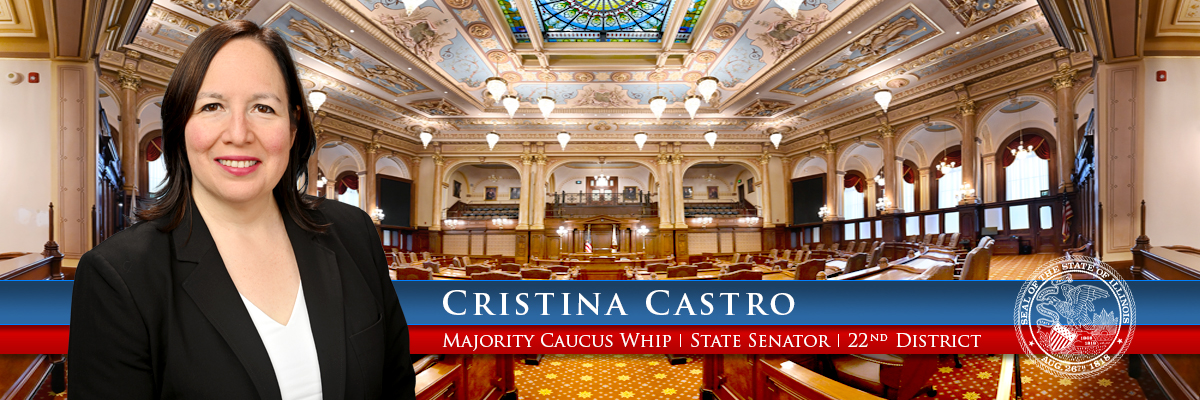
Thank you for visiting my legislative website. It is my honor to serve the citizens of the 22nd Senate District in the Illinois General Assembly. On this website, you can learn a little bit about me, my record in the General Assembly and the services I can provide you.

State Senator Cristina Castro
Majority Caucus Whip
22nd Senate District

Follow Sen. Castro


e-Newsletter Signup
Contact Info
District Office:
164 E. Chicago St.
Suite 201
Elgin, IL 60120
847-214-8864 phone
Springfield Office:
507 Capitol Building
Springfield, IL 62706
217-782-7746 phone