Welcome to Senator Cristina Castro's legislative website
Castro hosting veterans’ resource fair
- Details
- Category: Information
 BARTLETT – In partnership with Hanover Township, State Senator Cristina Castro is hosting her annual veterans’ resource fair to connect veterans and their families with agencies and businesses that serve them.
“Veterans put their life on the line to serve and protect each and every one of us. We have the responsibility to ensure their transition to civilian life is as smooth as possible,” said Castro (D-Elgin). “Events like this one give veterans the opportunity to learn about resources and connect with agencies that may be able to assist them.”
Castro announces funding opportunity for local fire departments
- Details
- Category: Information
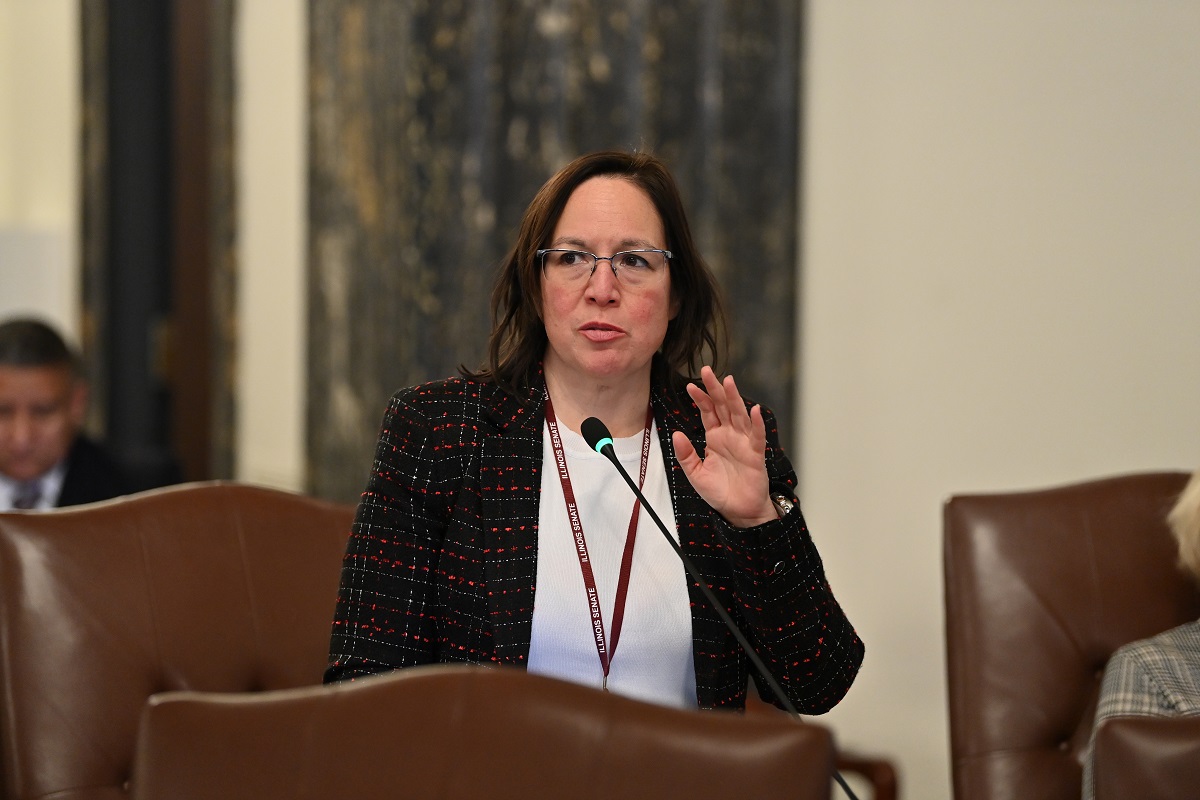 ELGIN – State Senator Cristina Castro announced that applications are now being accepted for the Small Equipment Grant Program to benefit fire departments and ambulance services in the 22nd District.
“It is crucial to ensure fire departments have the resources they need to protect our communities,” said Castro (D-Elgin). “The Small Equipment Grant Program is an excellent opportunity for fire departments to apply for additional funding.”
Castro encourages families to apply for energy bill assistance
- Details
- Category: News
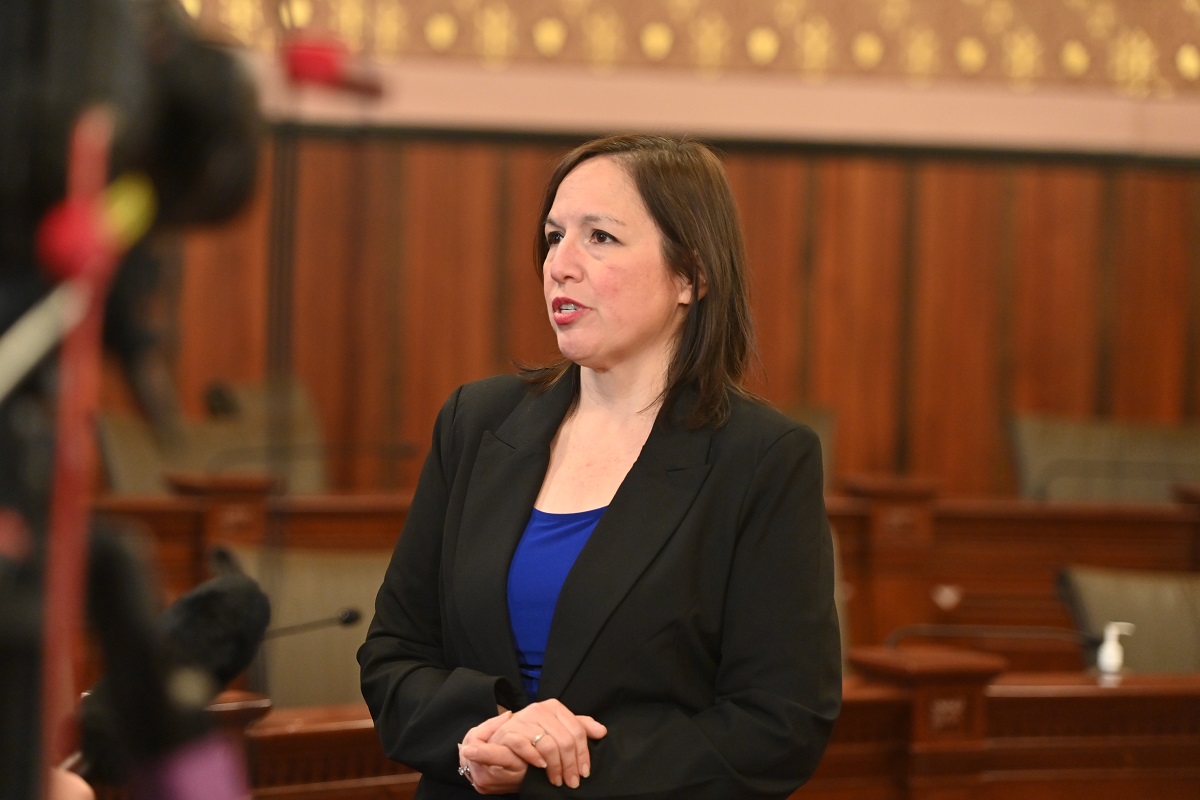 ELGIN – To combat rising energy prices, State Senator Cristina Castro encourages eligible families in the 22nd District to apply for the Low-Income Home Energy Assistance Program.
“As families navigate this time of economic uncertainty, many are having to make tough decisions. Nobody should have to sacrifice keeping the lights on or heat running,” said Castro (D-Elgin). “Now more than ever, it is imperative that we provide assistance to residents that need it most.”
Castro to host Mobile DMV event in Elgin
- Details
- Category: Information
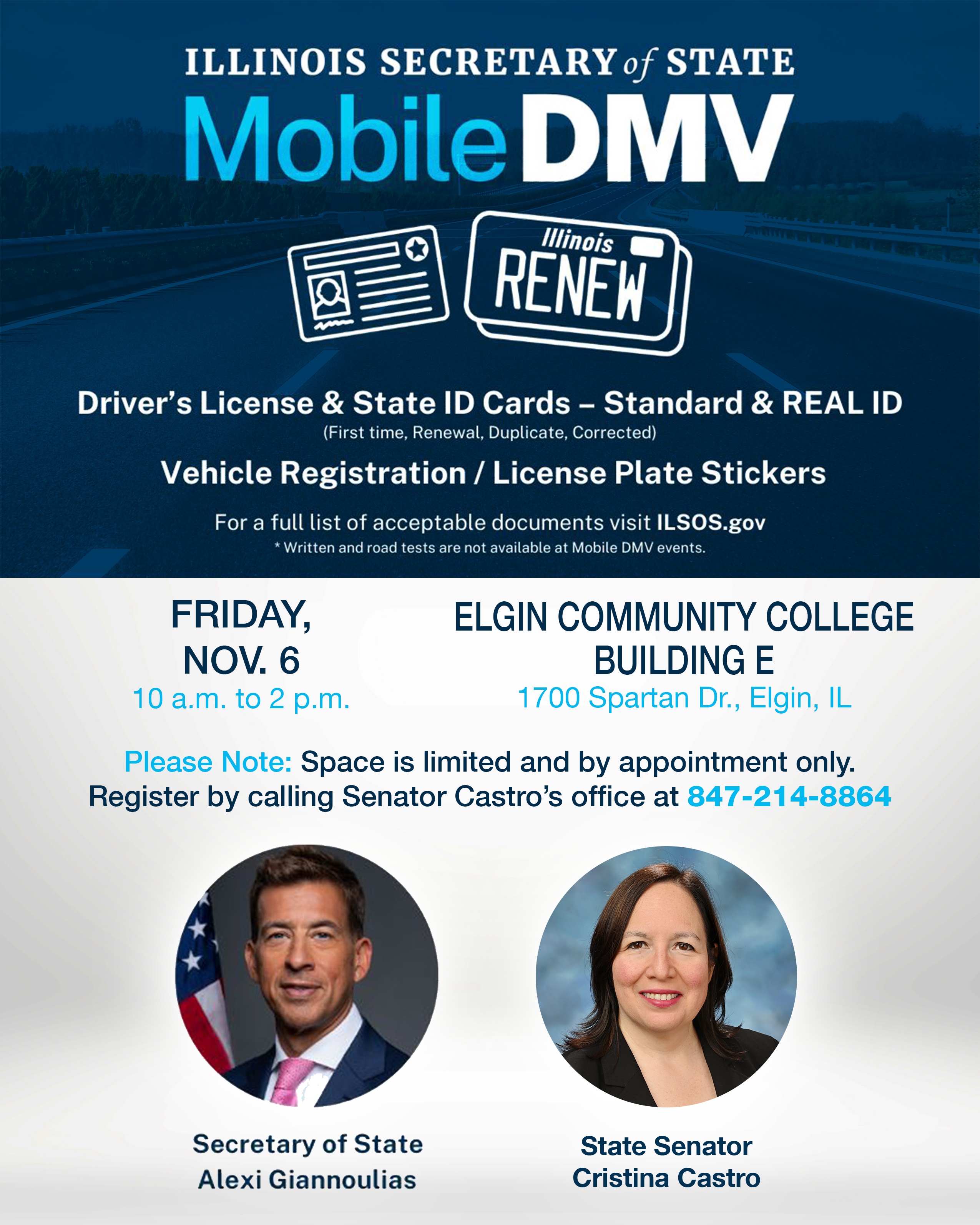 ELGIN – State Senator Cristina Castro is partnering with the Illinois Secretary of State to offer Elgin residents the opportunity to renew their driver’s licenses, purchase license plate stickers and more at a location easily accessible within the community.
“Mobile DMV events provide residents with the opportunity to receive DMV services with ease,” said Castro (D-Elgin). “Spots are limited so I encourage residents to call my office to reserve an appointment.”
More Articles …
Page 1 of 130
Welcome
Dear Friends,
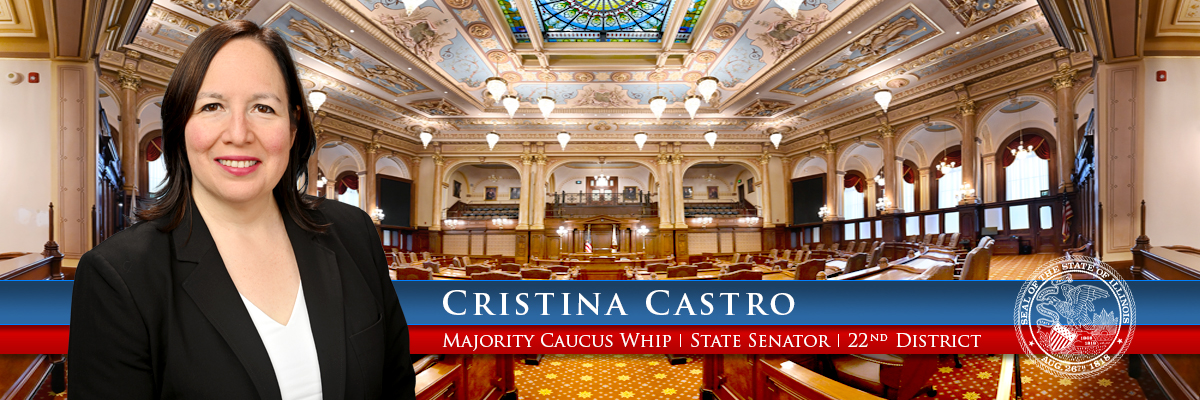
Thank you for visiting my legislative website. It is my honor to serve the citizens of the 22nd Senate District in the Illinois General Assembly. On this website, you can learn a little bit about me, my record in the General Assembly and the services I can provide you.

State Senator Cristina Castro
Majority Caucus Whip
22nd Senate District

Follow Sen. Castro


e-Newsletter Signup
Contact Info
District Office:
164 E. Chicago St.
Suite 201
Elgin, IL 60120
847-214-8864 phone
Springfield Office:
507 Capitol Building
Springfield, IL 62706
217-782-7746 phone